










For most buyers in 2026, the Toyota Sienna is the best all-around wheelchair accessible van: standard hybrid drivetrain, available all-wheel drive, and a reliability record that matters when the vehicle is your independence. The Chrysler Pacifica offers the widest choice of conversions and the strongest value. If you need towing capacity or serious room, a converted full-size SUV — Suburban, Yukon XL, Traverse — beats any minivan.
That’s the short answer. The honest answer is that “best” depends on who’s riding, who’s driving, and where the vehicle will live. Here’s how we walk customers through it at our Tyler showroom.
Best by situation
Best overall: Toyota Sienna
Every Sienna is a hybrid, which means real-world fuel economy no other accessible minivan matches — and it’s the only one available with all-wheel drive, worth having on East Texas back roads. Conversions are available in both side-entry and rear-entry. If you plan to keep the van a decade, the Sienna’s reputation for lasting is the deciding factor.
Best value and most options: Chrysler Pacifica
The Pacifica has been the volume platform for conversions for years, so there are more of them — new and used — than anything else. That supply keeps prices competitive and gives you the widest choice of ramp styles, floor plans, and price points. If you’re shopping used on a budget, you’ll likely end up in a Pacifica or its Dodge and Chrysler predecessors.
Best on a tight budget: a used rear-entry conversion
Rear-entry conversions cost less to build, so they cost less to buy — and used, they’re the most affordable way into an accessible vehicle. They suit families where the wheelchair user rides as a passenger, and they park in normal spaces without needing side clearance for a ramp. We break down the price differences in our wheelchair van cost guide.
Best for space, towing, and rural Texas: a converted full-size SUV
A minivan can’t tow a trailer or handle a ranch road. Converted Suburbans, Yukon XLs, and Traverses can — using lift systems and transfer seats instead of a lowered floor. They cost more, but for big families and working vehicles they’re the only real option. Our accessible vehicles page shows what’s on our floor now.
Best for wheelchair users who drive: a side-entry with a driver conversion
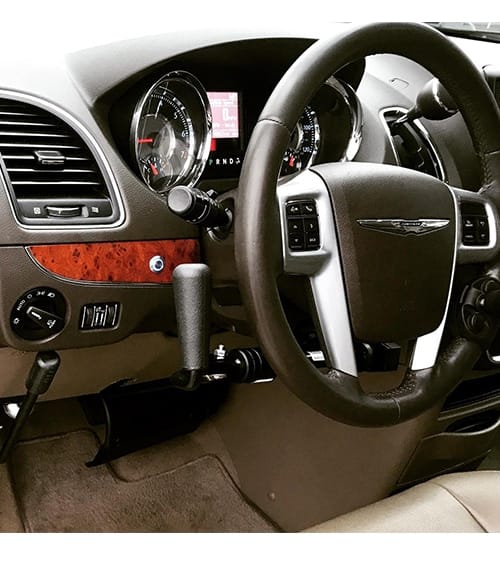
Side-entry is the requirement here — it’s the only layout that puts the wheelchair user at the wheel or in the front passenger position. From there, hand controls, transfer seats, or a wheelchair-driver setup get built around how you drive. This is a fit-it-to-you purchase; start with a conversation, not a spec sheet.
Side-entry or rear-entry?
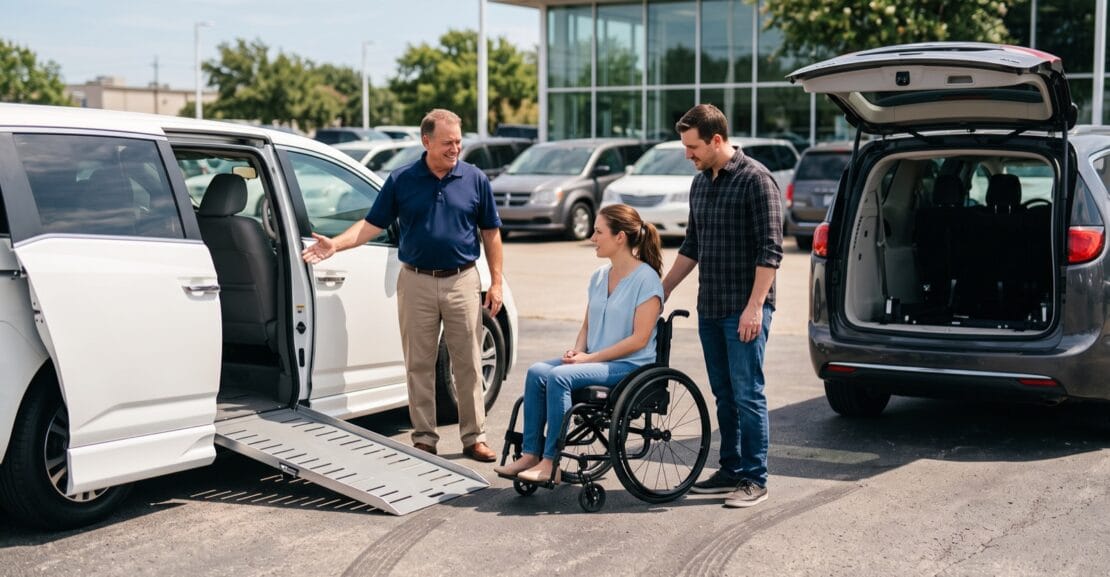
Side-entry: the ramp deploys from the sliding door, the wheelchair user can sit anywhere in the cabin, and you’ll want the extra clearance in parking lots.
Rear-entry: the ramp comes off the back hatch, costs less, and is easier for caregivers to operate — but the wheelchair position is in the rear.
Our first-time buyer’s guide covers this decision step by step.
New or used?
Conversion hardware routinely outlasts the vehicle around it, so a well-inspected used conversion is a sound purchase — and tens of thousands cheaper. What matters is who inspected it. A mobility dealer checks the ramp, kneel system, door operators, and tie-downs, not just the engine. Browse our current used wheelchair vans to see real examples with prices.
The one step you shouldn’t skip
Bring your own wheelchair and try the actual van. Door height, interior headroom, ramp angle, and the tie-down position all interact with your specific chair and body — two vans that look identical on paper feel completely different loaded. This is the main reason to buy from an NMEDA-member mobility dealer rather than a listing site: the fit test happens before the purchase, not after.
Frequently asked questions
What’s the most reliable wheelchair accessible van?
The Toyota Sienna, by reputation and by what we see come back for service. The Honda Odyssey earns a similar record. Remember the conversion has its own reliability separate from the vehicle — a well-built conversion on either platform will outlast the miles you put on it.
Is a used wheelchair van safe to buy?
Yes, when the conversion has been inspected by people who know conversions. Ask who checked the ramp and kneel system, and whether the dealer is an NMEDA member. If the answer is a shrug, keep shopping.
Should I get a minivan or an accessible SUV?
Minivan, unless you have a concrete reason otherwise. Lower floors, easier ramps, better economy, lower price. The SUVs earn their premium when you need towing, clearance, or more than five seats alongside the wheelchair position.
See them side by side in Tyler
We’re Access 2 Mobility, East Texas’s largest mobility showroom, serving Tyler, Longview, Waco, and the surrounding areas. The fastest way to find your best van is to roll into three or four of them in one afternoon. Contact us to set that up, or start with what’s on our floor right now.




