












What it really costsA new wheelchair accessible minivan typically costs $75,000 to $120,000 in 2026. A quality used one usually runs $35,000 to $85,000, depending on age, mileage, and the conversion. Converted full-size SUVs and trucks sit higher — often $90,000 to $150,000.
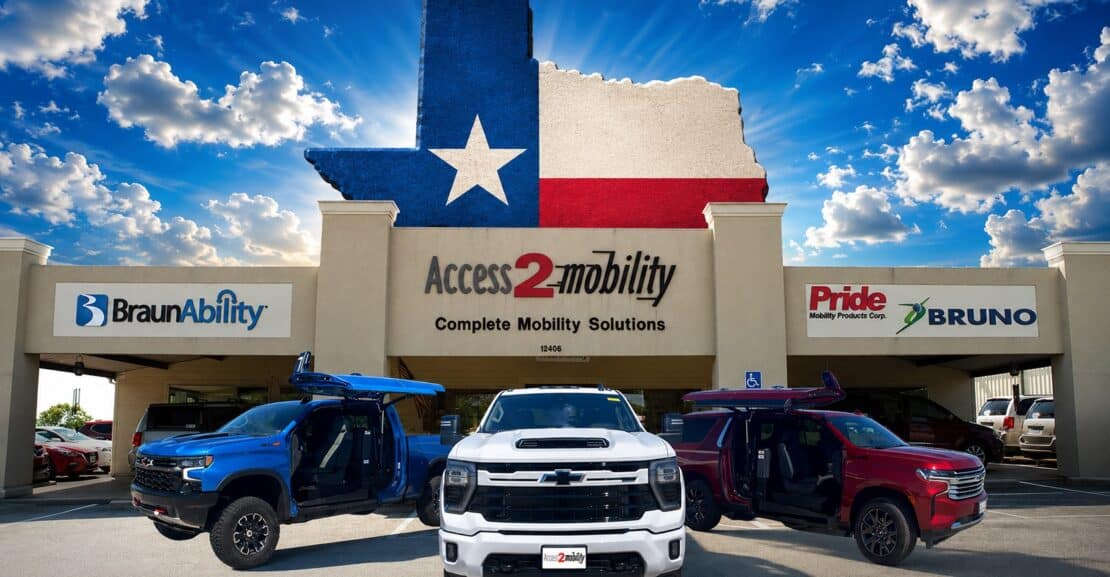
Those are national ranges. Here’s what it looks like on an actual showroom floor: as of mid-2026, the used accessible vehicles at our Tyler, Texas showroom range from the mid-$50,000s to about $145,000. Our stock leans toward newer, low-mileage conversions, which is why it starts above the national floor. You can see current prices on our used wheelchair vans and accessible vehicles pages — inventory changes often.
Why do wheelchair vans cost so much?
You’re buying two things: the vehicle and the conversion. The conversion alone adds roughly $25,000 to $45,000 to the price of the base vehicle. That money pays for a lowered floor, a ramp or lift, kneeling suspension, a reinforced structure, and crash testing of the finished vehicle.
A $40,000 minivan with a $35,000 conversion is a $75,000 vehicle before anyone marks it up. There’s no trick to it — the engineering is simply expensive.
What moves the price up or down
New wheelchair vans, $75,000 to $120,000
A new conversion carries warranty coverage on the vehicle and on the conversion work, and a ramp nobody has worn out yet. You are paying for a new minivan plus a new conversion, which is most of the gap between these two numbers. If you plan to keep the van eight or ten years, that warranty coverage is usually what justifies it.
Used wheelchair vans, $35,000 to $85,000
A used conversion van saves serious money, and the conversion hardware is built to outlast the drivetrain. The key is buying one that a mobility dealer has inspected — the ramp, the door operation, the kneel system, and the tie-downs all need to be checked, not just the engine. See what is on the lot right now in our wheelchair van inventory.
Rear-entry vs. side-entry
Rear-entry vans are usually the least expensive option. The conversion is simpler, so the same vehicle costs thousands less than its side-entry equivalent. The trade-off: the wheelchair user rides in the rear, and you need clearance behind the vehicle to deploy the ramp. Side-entry vans cost more but let the wheelchair user ride up front — or drive.
Minivan vs. full-size SUV or truck
Converted Suburbans, Yukons, and pickups cost more than minivans — the vehicles cost more to begin with, and most use a lift and transfer seat rather than a ramp. They make sense if you need towing capacity, ground clearance, or seating for a large family.
Driver conversions
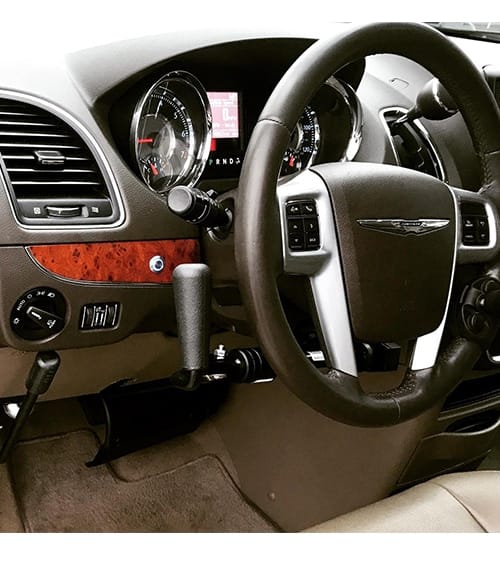
Hand controls, left-foot accelerators, transfer seats, and wheelchair-driver positions each add cost. If the wheelchair user will drive, budget for the equipment and for the evaluation that determines what’s needed.
Ways to bring the cost down
- VA benefits. Qualifying veterans can receive substantial help with both the vehicle and the adaptive equipment. We’re a VA-approved provider and handle the paperwork regularly. Start with our VA benefits page.
- Texas grants and funds. Several programs help Texans pay for accessible vehicles and modifications. We keep a current list on our grants and funds page.
- Financing. Mobility-specific loans spread the cost over terms that fit these vehicles. See our accessibility loans page.
- Medicaid waiver programs. Medicare does not pay for wheelchair vans. Some Texas Medicaid waiver programs, though, can help with vehicle modifications. Ask your caseworker, and ask us — we’ve seen what gets approved.
- Rent first. If you’re not sure a van fits your life yet, rent one for a week. It’s the cheapest way to find out what you actually need before spending real money.
Costs people forget to budget
Plan for tax, title, and license — listed prices don’t include them. The conversion also needs periodic service just like the drivetrain: ramp motors, door operators, and kneel systems should be inspected regularly. A mobility dealer can service both sides of the vehicle; a regular mechanic can only service one.
Frequently asked questions
What’s the cheapest way to get a wheelchair accessible van?
A used rear-entry minivan. It combines the two biggest savings — used pricing and the simpler conversion — and works well when the wheelchair user rides as a passenger.
Does insurance or Medicare cover a wheelchair van?
Health insurance and Medicare treat vehicles as transportation, not medical equipment, so they don’t cover the purchase. VA benefits, state grant programs, and Medicaid waivers are the funding sources that actually pay out — that’s where to spend your effort.
Can I try a van before I buy one?
Yes. Schedule a test drive at our Tyler showroom with your own wheelchair — ramp angle, door height, and interior room all feel different in person than on a spec sheet. Rentals work as an extended test drive too.
Can I finance a wheelchair van?
Financing is common, and terms often run longer than a standard auto loan because the amount is larger. A lender that handles mobility vehicles will finance the conversion along with the vehicle, which a general auto lender sometimes will not. Ask us who we work with before you apply somewhere.
How much does it cost to convert a van I already own?
Roughly $25,000 to $45,000 for the conversion itself, depending on whether you are having a lowered floor and ramp fitted or a lift system installed. Not every vehicle is worth converting — the year, the mileage, and the model all matter, because the conversion has to outlast the van it goes into. Send us the year, model, and mileage and we can tell you whether it makes sense.
Talk to Access 2 Mobility before you decide
We’re Access 2 Mobility, East Texas’s largest mobility showroom, in Tyler and serving Longview, Waco, and the surrounding areas. Bring us your budget and your situation — including if the numbers above look out of reach. Between used inventory, VA benefits, grants, and financing, there’s usually a path. Contact us here or read our step-by-step buying guide next.




