











Buying a wheelchair-accessible van is one of the most significant purchases a person with a disability — or their family — will make. The decision affects daily independence, safety, and long-term quality of life.
If you’re buying for the first time, here’s what to know before you spend a dollar.
Step 1: Identify How the Wheelchair Van Will Be Used
The most important question isn’t which van to buy — it’s how the wheelchair user will ride.
There are three scenarios:
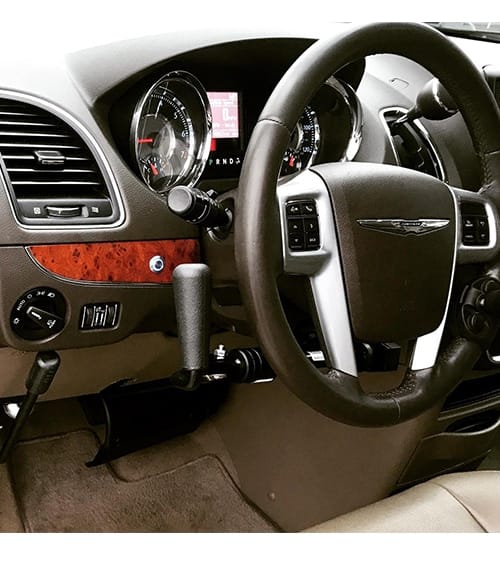
- Wheelchair user drives independently: You’ll need a van with a driver-side conversion, hand controls or a left-foot accelerator, and a tie-down system positioned at the driver’s location.
- Wheelchair user rides as front passenger: Side-entry vans allow the wheelchair user to position in the front passenger spot with the factory seat removed.
- Wheelchair user rides in the rear: Both side-entry and rear-entry vans work.
Rear-entry vans are often less expensive.
Step 2: Choose Side-Entry or Rear-Entry
Side-entry vans deploy a ramp or lift from the sliding side door. The main advantages: no need for extra clearance behind the vehicle, and the wheelchair user can sit anywhere in the cabin (including the driver’s seat or front passenger position).
Rear-entry vans use a ramp from the rear hatch. Advantages: lower cost (no floor lowering required), simpler conversion, and easier for caregivers to operate.
Disadvantage: the wheelchair user must position in the rear, and you need 5–6 feet of clearance behind the vehicle to deploy the ramp.
Step 3: Choose a Conversion Brand
The conversion brand matters as much as the base vehicle. The main brands are:
- BraunAbility — Most widely sold in the U.S. Excellent dealer network, long parts availability, strong resale value.
Their powered in-floor ramp for the Chrysler Pacifica is the industry standard. See our accessible van conversions page for a full breakdown of BraunAbility and ATC options.
- ATC (All Terrain Conversion) — specializes in modifying full-size trucks and large SUVs into fully wheelchair-accessible vehicles.
Founded and operated by wheelchair users, the company provides a rugged, 4×4-capable alternative to traditional wheelchair-accessible minivans.
Step 4: Consider Your Wheelchair
Your current wheelchair — its width, height, and weight — determines which vans will work.
Measure your wheelchair in your seated position before shopping:
- Width: The ramp and doorway opening must accommodate it. Most modern minivan conversions handle up to 30″ width easily; some wider power chairs need a full-size van.
- Height: The interior height after floor lowering must be enough for you to sit upright comfortably.
Lowered-floor minivans typically offer 56″–62″ of interior headroom.
- Weight: Ramp weight ratings vary. Most handle up to 800 lbs (combined wheelchair + occupant).
Heavier power chairs or bariatric chairs may require a lift rather than a ramp.
Step 5: New vs. Pre-Owned
New wheelchair vans come with full warranties on the base vehicle and the conversion, but they’re expensive — typically $65,000–$100,000+ (a new 2026 BraunAbility Chrysler Pacifica conversion starts around $93,000). Pre-owned accessible vans with the same conversions can cost $20,000–$40,000 less.
Pre-owned vans that have been properly inspected by a certified mobility dealer (like Access 2 Mobility) are a sound investment.
Ask specifically about the condition of the ramp or lift, the floor lowering, and the tie-down anchors.
Step 6: Explore Financial Assistance
Most buyers don’t pay full price out of pocket:
- VA Automobile Allowance — Up to $27,074.99 (current rate as of Oct 2025) for veterans with qualifying service-connected disabilities
- Medicaid Waiver Programs — Many state Medicaid programs fund vehicle modifications
- Vocational Rehabilitation — If your disability affects your ability to work, VR can fund the vehicle
- Non-profit grants — See our Texas grants resource page
- Specialized financing — Partners like Eastman Credit Union offer accessible-vehicle loan programs
Step 7: Schedule a Test Drive
Always test the ramp with your actual wheelchair before buying.
Load angles, door widths, and cabin positioning feel different in person than they look in photos. A reputable dealer will encourage a test drive and give you time to evaluate how the vehicle works in your daily routine.
At Access 2 Mobility in Tyler, TX, we welcome test drives and encourage you to bring your wheelchair, your caregiver, and your family.
Call (903) 592-6760 to schedule.




