











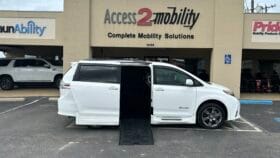

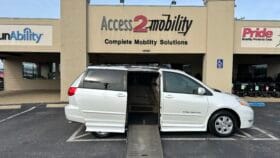


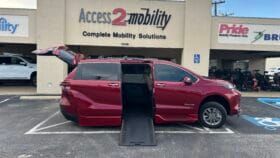

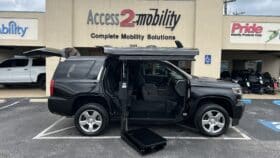


Accessible vans give wheelchair and scooter users the freedom to travel as a passenger, front-seat rider, or driver. At Access 2 Mobility in Tyler, Texas, we sell, convert, and service wheelchair accessible vans from BraunAbility and ATC Conversion.
This guide keeps things simple, so you can quickly see how conversions work, which features matter, and how to pick the right accessible van for your body, your budget, and the way you live.
A wheelchair accessible van is a standard minivan or full-size van that a shop converts to fit a wheelchair user. Generally, minivans are the popular choice for daily driving, while full-size vans suit larger power chairs or several riders at once.
Either way, our team can help you compare both and find an accessible van that fits how you live.
How Wheelchair Van Conversions Work
Turning a minivan into an accessible van takes two main steps, and skilled technicians handle both:
- Floor lowering — Technicians cut and lower the floor, usually 10 to 14 inches, then rework it so it stays strong and watertight.
This is the biggest part of the job, and it is what gives a rider enough headroom to sit comfortably in a power wheelchair or scooter.
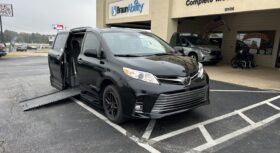
- Entry system — The shop adds a ramp (manual fold-out or powered in-floor) or a platform lift at the side door or rear hatch.
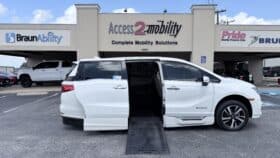
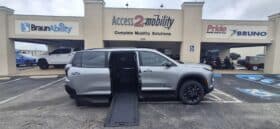
Powered in-floor ramps like BraunAbility’s are the most popular, because they stow flat and leave a clear, full-width doorway. A platform lift, on the other hand, works well for heavier power chairs and full-size vans.
A well-built accessible van feels just like the original vehicle from the driver’s seat.
Side-Entry vs.
Rear-Entry Accessible Vans
Most accessible vans use one of two layouts:
- Side-entry — the ramp sits at the passenger sliding door. This is the best choice if you want to ride up front, drive from your wheelchair, or move around freely inside the cabin.
- Rear-entry — the ramp sits at the back. It costs less and parks easily in tight spots.
However, the wheelchair rides between the rear wheels instead of up front, and two riders can load one after another.
If you are not sure which one fits, we will help you weigh both against the way you travel every day.
Conversion Brands We Carry
- BraunAbility — undoubtedly the best-known name in wheelchair van conversions.
Its Chrysler Pacifica is the best-selling accessible minivan, with a strong track record, a wide dealer network, and easy-to-find parts.
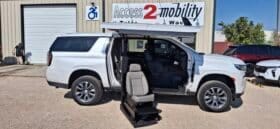
- ATC Conversion — likewise converts full-size trucks and SUVs (GMC Yukon, Chevrolet Suburban, GMC Sierra) for drivers who need to tow or prefer an SUV. These builds keep a factory-style ride and full seating for the rest of the family.
See the ATC Conversion site.
Accessible Van Features to Ask About
When shopping for an accessible van, consider:
- Ramp type: for example, manual fold-out, powered fold-out, or powered in-floor
- Ramp angle — lower angles are easier for manual and lightweight power chairs
- Interior headroom after floor lowering (56″–62″ by model)
- Tie-down and locking systems, such as Q’Straint or Sure-Lok
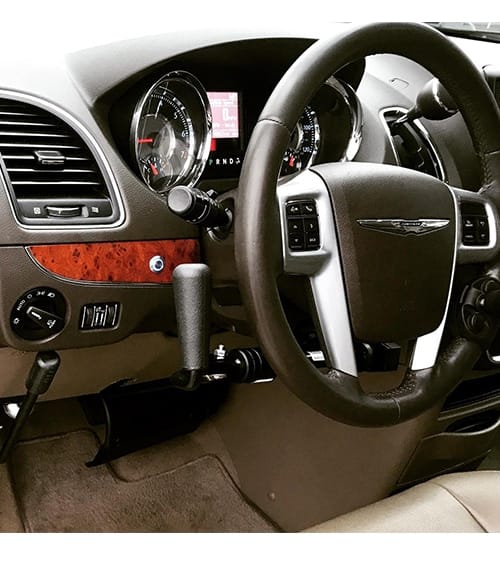
- Driver options: hand controls, left-foot gas pedal, spinner knob
- Seating — can you put the factory seats back when you don’t need them?
Because every rider is different, bring your wheelchair when you visit, and we will measure for a proper fit.
We will also point out the trade-offs, so nothing surprises you later.
New vs.
Used Accessible Vans
- New — a new accessible van brings the latest safety features, a full factory warranty, and the newest ramp technology. You also choose the exact ramp layout and seating you want.
- Used — a used wheelchair van costs far less, so it is a smart pick for a first-time buyer or a backup vehicle.
Because a quality conversion outlasts the original van, a well-kept used accessible van is often a great value.
For now, browse our used wheelchair vans to see what is in stock.
Paying for an Accessible Van
The price of an accessible van covers both the vehicle and the conversion work, so many buyers use financing or grant help.
Texas offers several programs, and manufacturers often add mobility rebates on new conversions. Veterans may also qualify for an automobile allowance through the U.S. Department of Veterans Affairs. Start with our guide to grants and funding programs and see what fits your budget.
Many buyers pair a grant with financing to keep the monthly payment low.
Service and Maintenance
An accessible van needs the same oil changes and tires as any vehicle, plus care for the ramp, lift, and tie-downs. We service every accessible van we sell, and we work on most other brands too. Regular checkups keep the ramp moving smoothly and the securement system safe.
A quick yearly check is far cheaper than a roadside repair or a missed appointment. If something ever feels off, bring the van in and we will check it right away.
Why Buy Your Accessible Van from Access 2 Mobility
Because BraunAbility and ATC factory-train our staff, we know these accessible vans inside and out.
We walk you through the options for your specific wheelchair, vehicle, and lifestyle, and we stand behind every van long after the sale. Looking for a lower-cost option? Browse our used wheelchair vans, or explore grants and funding programs. Call (903) 592-6760 or send us a message to set up a no-pressure demo at our Tyler showroom.