










The short answer – Yes, most people can drive again after losing an arm, hand, leg or foot. What changes is how the car is set up. Depending on which limb you lost and where, that could mean nothing more than a steering knob, or it could mean hand controls, a left-foot accelerator, or learning to drive with your prosthesis.
We fit adaptive driving equipment in our own shop in Tyler, Texas, and serve drivers in Waco and Central Texas from our Elm Mott store. See the hand controls and transfer seats we install.
Start with a driving evaluation
Before you buy anything, see a certified driver rehabilitation specialist. They test your strength, reach and reaction time, then take you out in a car fitted with different controls. You leave with a written prescription for the equipment that suits your body and your driving.
That prescription keeps you from paying for the wrong setup. The Association for Driver Rehabilitation Specialists (ADED) lists certified evaluators, and your doctor or occupational therapist can refer you.
Texas license rules
A Texas driver license can carry restriction codes that describe how you drive. The Texas Department of Public Safety’s list includes T (automatic transmission), U (applicable prosthetic devices) and P38 (applicable vehicle devices).
Before you drive with new controls or a new prosthesis, contact DPS and ask whether your license needs one of these restrictions or a new road test. Keep your evaluator’s report handy when you do.
What driving after amputation looks like, by limb
Every case is different, and your evaluator and doctors make the final call. These are the setups drivers most often end up with.
One arm or hand
A steering knob (often called a spinner) lets you turn the wheel fully with one hand. Turn signals, wipers and lights can be moved to the side you use. If you lost only part of a hand, you may need no changes at all.
Left leg or foot
In an automatic, your right foot already does the work, so many drivers need no changes. The main thing to check is getting in and out comfortably.
Right leg or foot
You have three choices. You can drive with a prosthesis on the standard pedals, use your left foot on a left-foot accelerator, or switch to hand controls. Your evaluator will help you pick.
Above the knee or at the hip
This includes knee, hip and pelvic amputations. Many drivers find hand controls easier and more comfortable than working floor pedals with a prosthesis.
Both legs
Some drivers use two prostheses on the standard pedals. Others use hand controls, which put acceleration and braking on a lever beside the steering column.
Both arms
This is the hardest case, but it can be done. Some drivers steer with body-powered prosthetic hooks and a reduced-effort wheel. Others use foot-steering systems that move steering and dashboard controls to the feet.
The equipment that makes it work
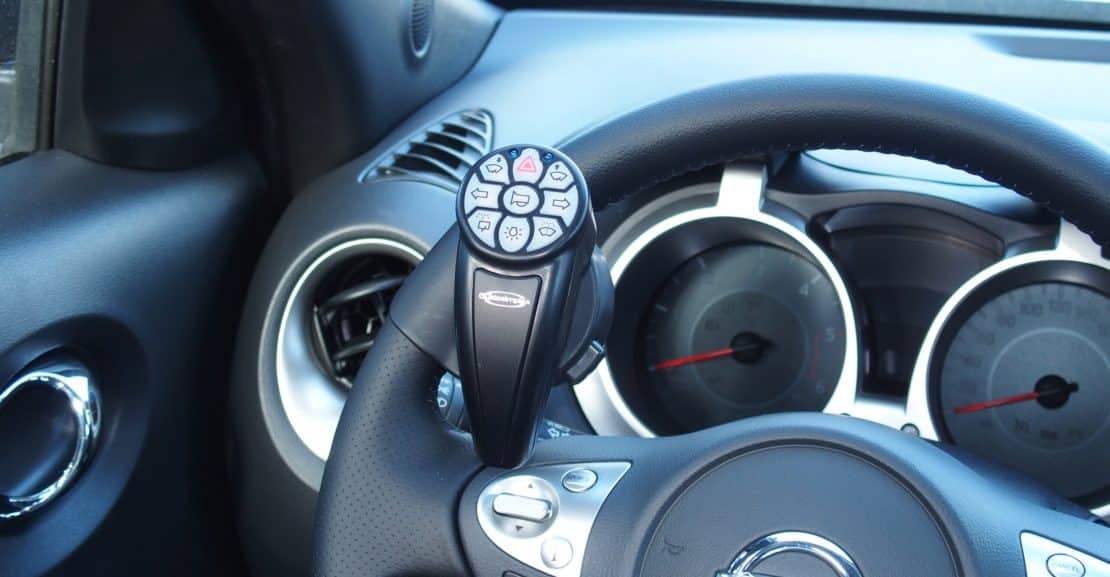
- Steering knob or spinner. Clamps to the wheel so you can steer with one hand or a prosthesis. For many arm amputees it is the main change they need.
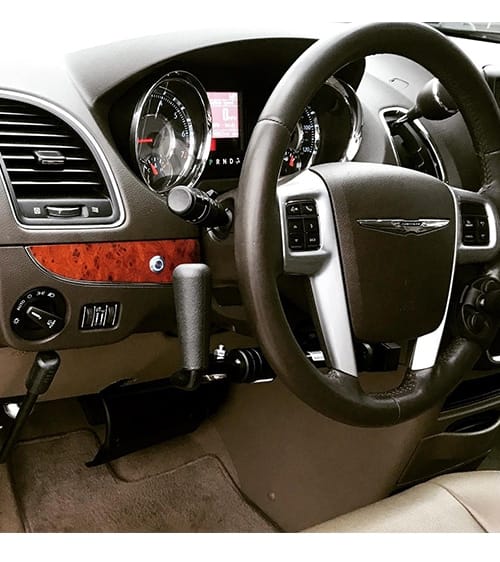
- Hand controls. A lever that runs the gas and brake. Push-rock and push-pull mechanical controls, like MPS, give a direct feel. Electronic systems, like Sure Grip FeatherLite and Guidosimplex, suit more complex needs. The factory pedals keep working, so others in your household can still drive the car.
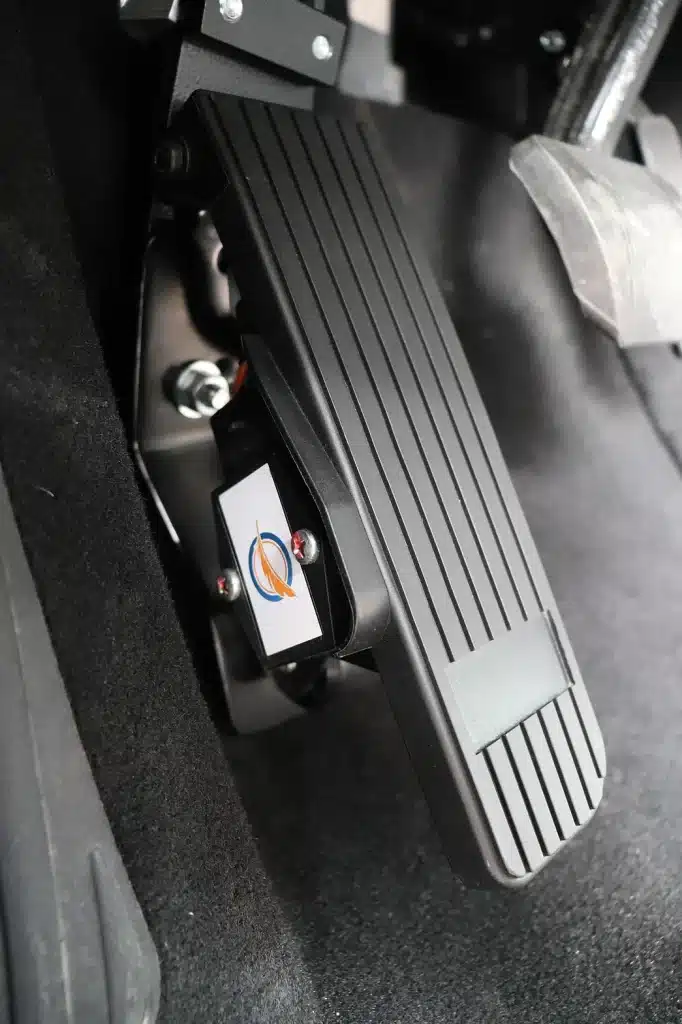
- Left-foot accelerator. Adds a gas pedal to the left of the brake for drivers who have lost their right leg or foot. Many models fold up or come out when someone else drives.
- Ring accelerators. Guidosimplex’s Over-Ring and Ghost under-wheel accelerators put the gas on a ring at the steering wheel, so you accelerate without taking your hands off the wheel. See them on our Guidosimplex page.
- Secondary controls. Keypads and switches that move turn signals, horn, lights and wipers to where you can reach them without letting go of the wheel or the hand control. The Guidosimplex Stick-Steer is one example: a steering device with the secondary controls built in.
- Transfer seats. The BraunAbility Turny Evo swings the vehicle seat out through the door and lowers it toward you. The Adapt Solutions Asento XL-Seat does the same job for larger users.
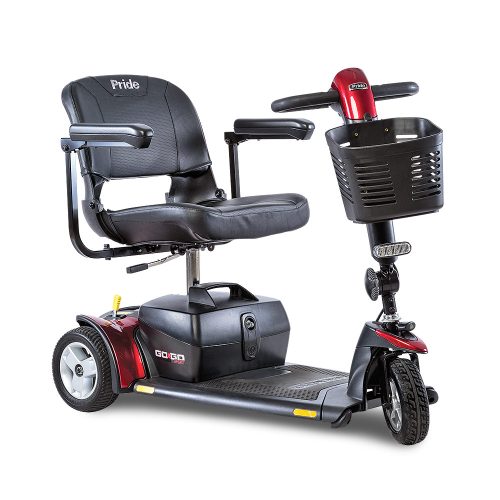
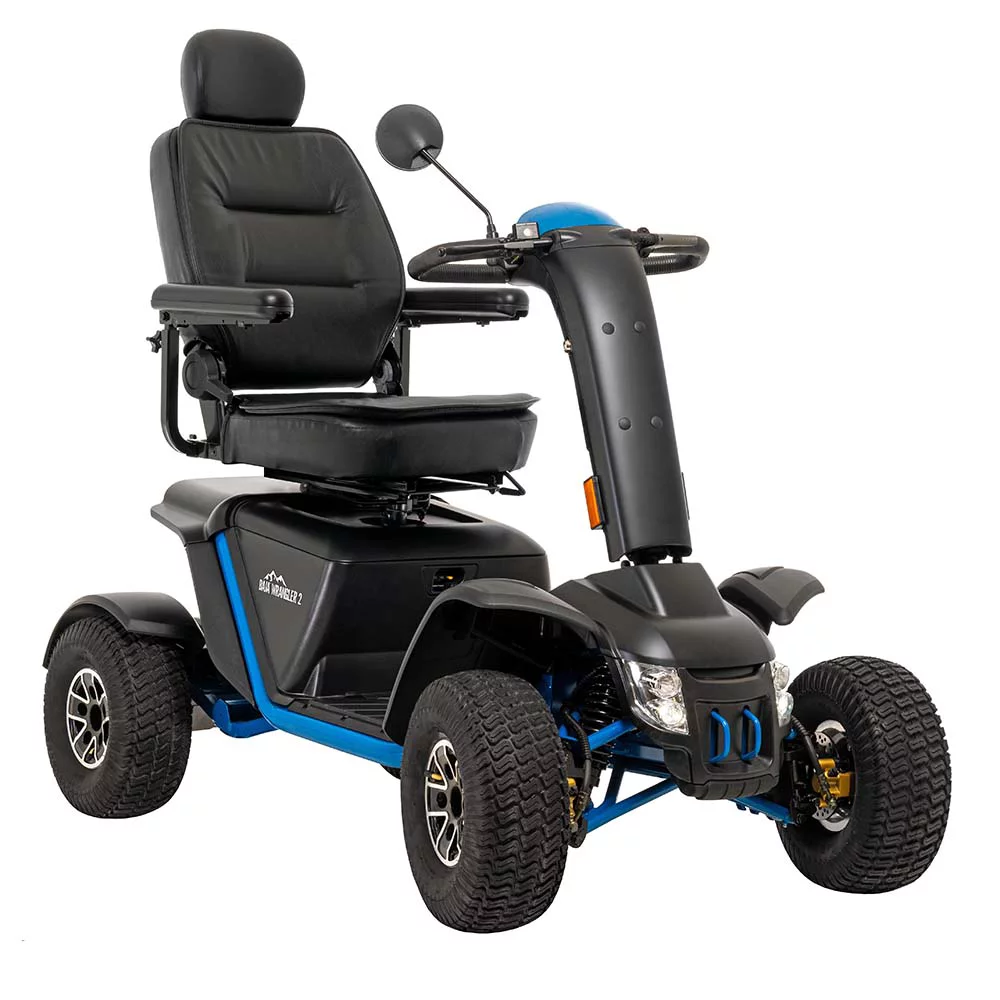
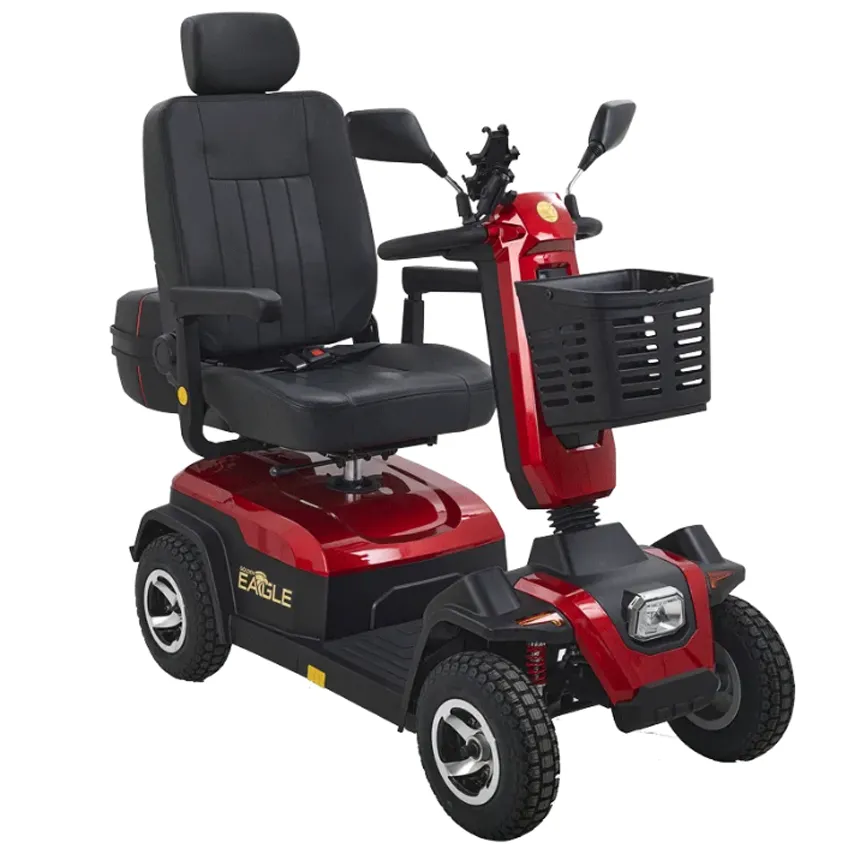
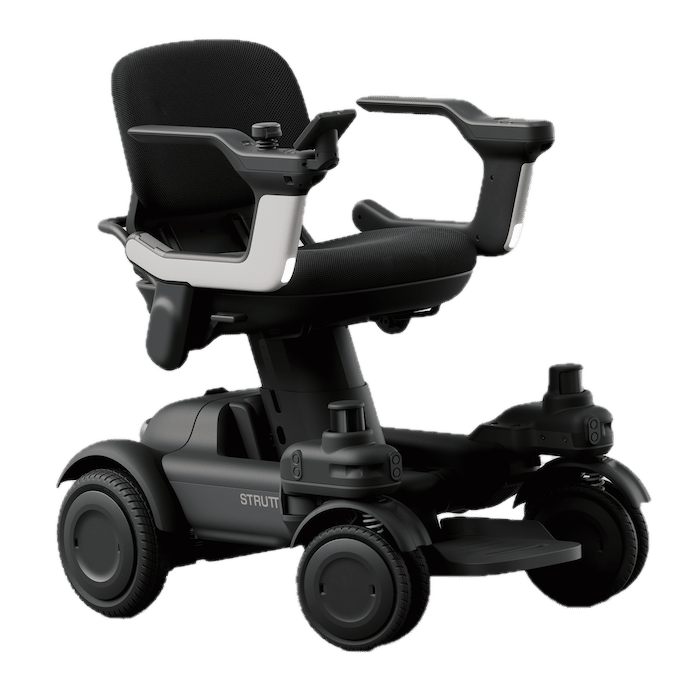
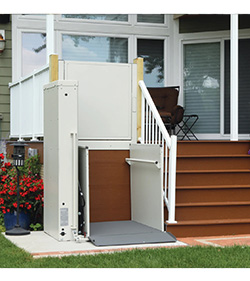
- Lifts for a wheelchair or scooter. If you use a chair or scooter some of the time, a lift such as the Bruno Out-Sider carries it on the back of the vehicle. See all of our vehicle equipment.

Driving with a prosthesis
Some people would rather drive with their prosthesis than change the car, because it keeps the vehicle standard. It can work, but it takes practice, so start in an empty parking lot rather than on the road.
With a leg prosthesis, the hard part is feeling where your foot is. You can’t sense the pedal the way you used to, so moving from gas to brake takes time to learn. With an arm prosthesis, a steering knob makes turning much easier.
If you take your prosthesis off for the drive, put it in a case or secure it so it can’t slide around and get damaged. Don’t leave it loose on the floor near the pedals.
Before you buy or modify a vehicle
- Get your driver evaluation and written prescription first.
- Choose an automatic transmission. Most adaptive equipment is designed for one.
- Check that you can get in and out without strain. If you can’t, look at a transfer seat or a different vehicle.
- Look for plenty of legroom, especially with a leg prosthesis.
- Make sure the seat and steering wheel both adjust.
- If a program is paying, read its vehicle rules before you sign anything. Some only cover certain vehicles or require their own approval first.
- Have the equipment fitted by a dealer accredited under the NMEDA Quality Assurance Program. We are.
Paying for adaptive equipment
Veterans
Losing a hand or foot, or permanently losing the use of one, can qualify a veteran for the VA’s automobile allowance and adaptive equipment grant if the condition is service-connected. Read our guide to what the VA will pay toward a vehicle, or see mobility equipment for veterans. We are VA-approved and can help you through the process.
Working Texans
Texas Workforce Commission Vocational Rehabilitation Services can pay for vehicle modifications when you need them to get or keep a job. Its own policy manual lists hand controls among the modifications it may approve. A few rules apply. The work has to be written into your Individualized Plan for Employment before it starts, most people need a driver’s evaluation first, and TWC pays only for new modification equipment. Ask your VR counselor to start the process.
Commercial drivers
If you drive a truck across state lines, federal rules apply. An amputee driver can still qualify through the FMCSA Skill Performance Evaluation (SPE) certificate, which tests whether you can drive safely with your prosthesis or modifications.
Common questions
Can an amputee get a driver’s license?
Yes. Losing a limb does not by itself stop you from getting a license. You may need a driving evaluation and equipment. In Texas, DPS can add a restriction such as U (applicable prosthetic devices) or P38 (applicable vehicle devices) to your license.
Can I drive with a prosthetic leg?
Many people do. Losing your left leg usually matters little in an automatic, since your right foot does the driving. On the right side, or above the knee, many drivers switch to a left-foot accelerator or hand controls because they are easier to control.
Will hand controls stop other people driving my car?
No. Hand controls leave the factory pedals working, so a spouse or family member can drive the car as normal.
Can I still drive a manual transmission?
It can be done with the right modifications, but most adaptive equipment is designed for automatics. Most evaluators recommend one.
How long does installation take?
It depends on the vehicle and the equipment. We check that the controls fit your make and model first, then install them at our shop and give you a timeline when we see the vehicle.
Get back behind the wheel
Bring your prescription and your vehicle to our Tyler showroom at 12406 State Highway 155 S. We will confirm what fits, install it, and service it afterward. Call (903) 592-6760, or reach our Elm Mott store at (254) 417-8767.
This article is general information, not medical or legal advice. Your driver rehabilitation specialist and doctors should guide your choice of equipment.


