
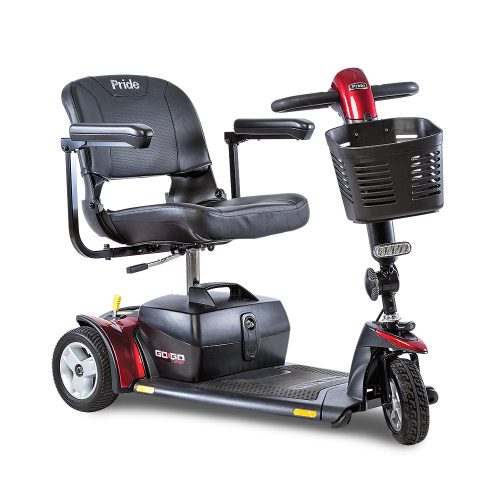

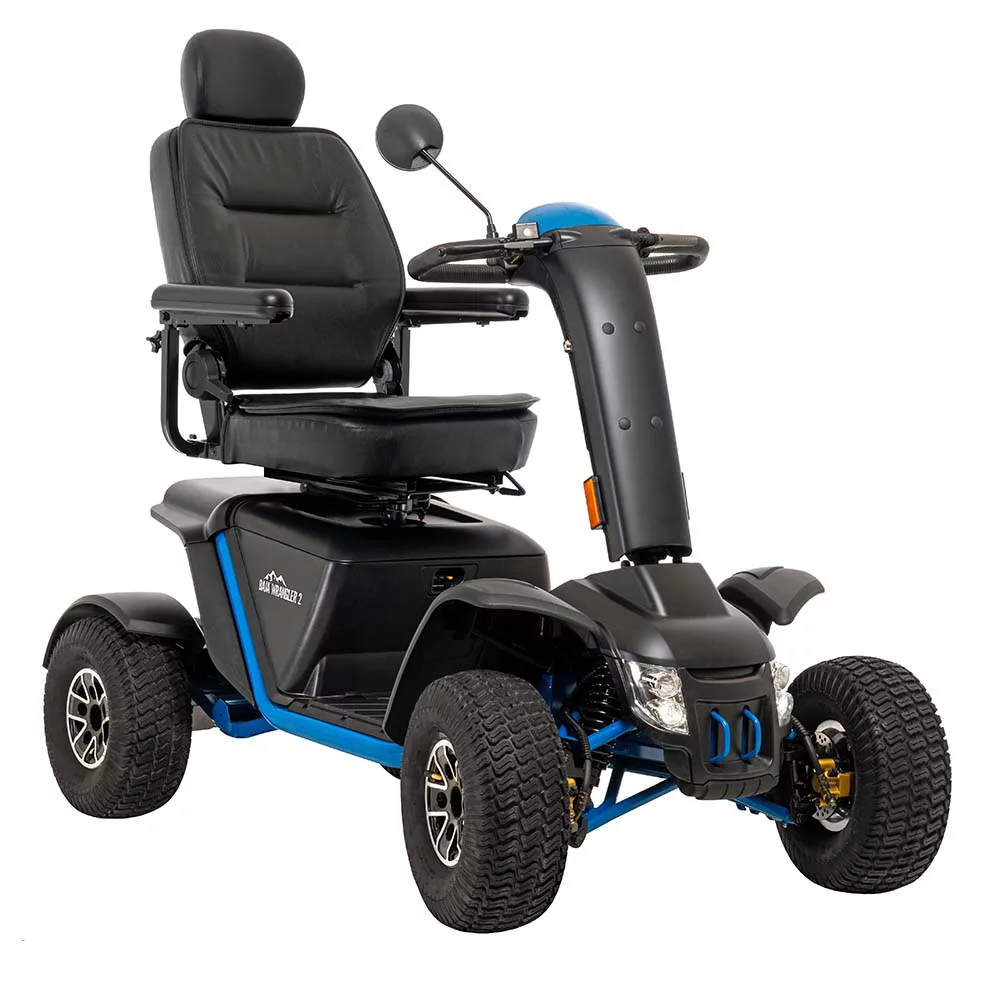
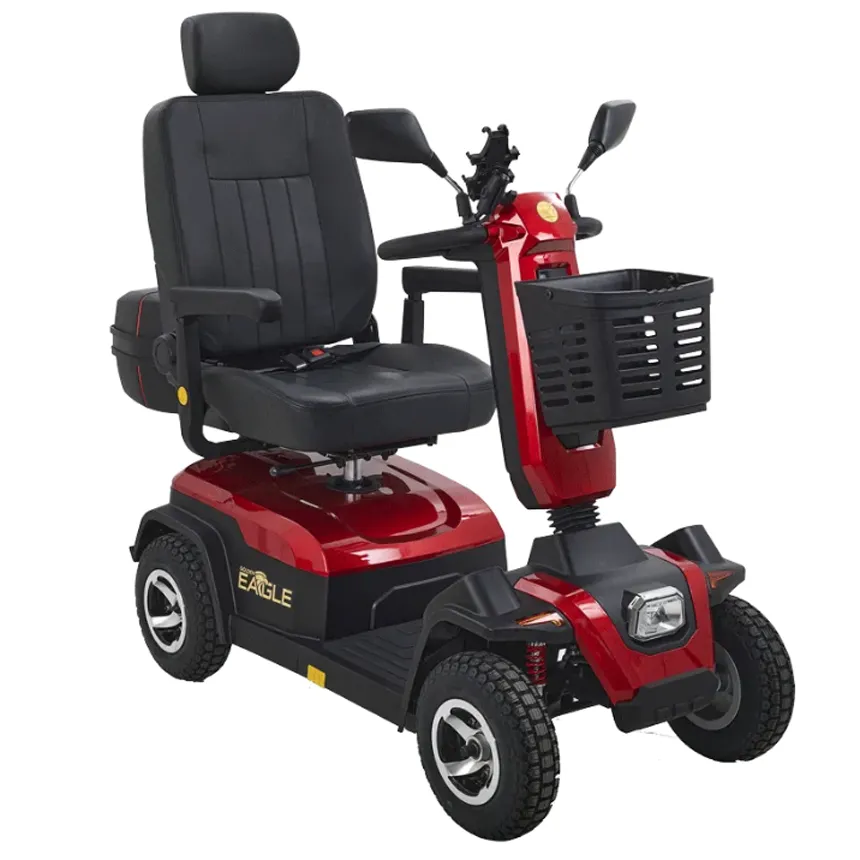
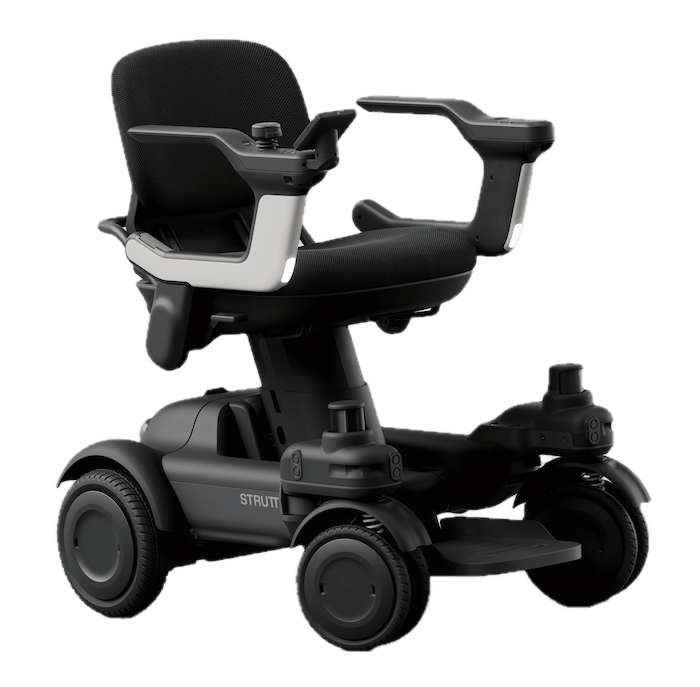
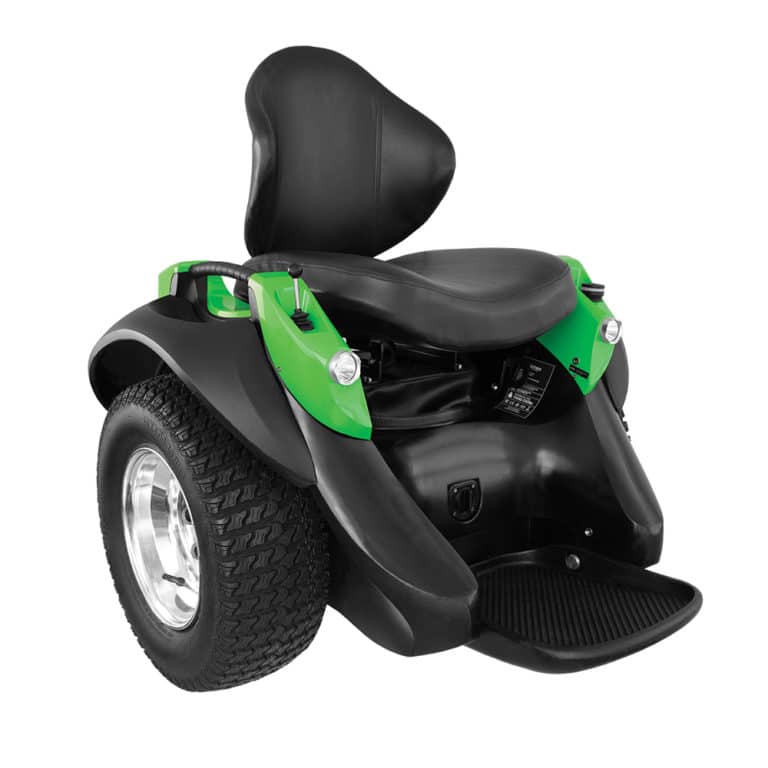

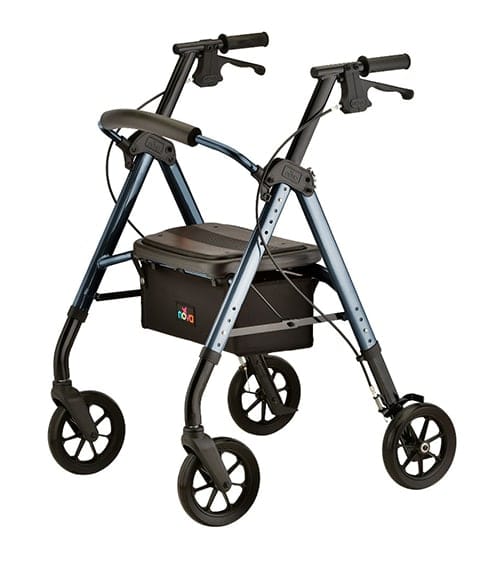


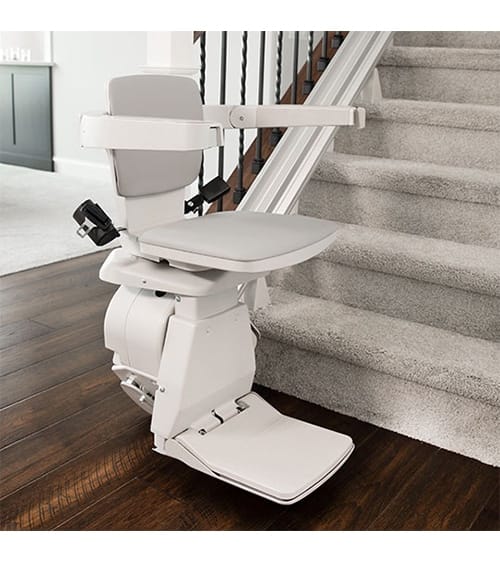






Power wheelchairs and mobility scooters look similar at first glance. Both run on batteries, both carry one person, and both cut the need to walk. But they are built for very different users, places, and levels of need. Choosing the wrong one can mean poor handling, too little support, or a device that ends up parked in the garage.
The Core Difference
A power wheelchair is a medical device.
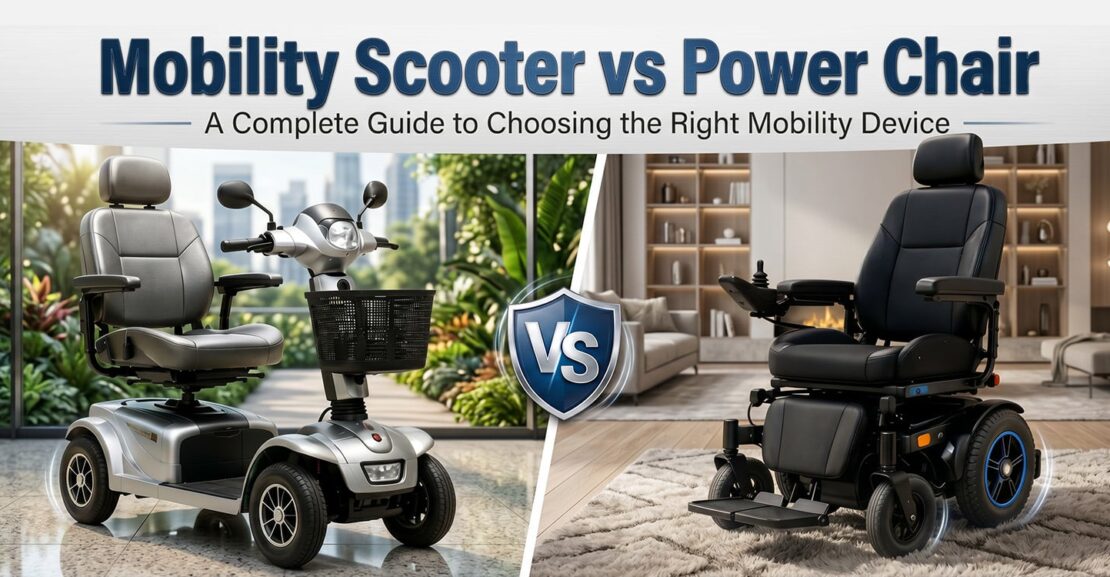
It is built for people who cannot push a manual wheelchair and need full body support. You steer it with a joystick, usually mounted at the hand or chin. It can also be set up with tilt, recline, raised footrests, and custom seating for complex needs.
A mobility scooter is a consumer device. It suits people who can walk short distances but tire easily over longer ones. The user needs enough upper body strength and balance to sit upright without side support. They also need enough hand function to steer a tiller-style handlebar.
Scooters are not made to replace a wheelchair for someone with serious mobility loss.
Who Should Choose a Power Wheelchair
- People with ALS, MS, muscular dystrophy, spinal cord injury, or other conditions affecting core stability
- Anyone who cannot sit upright unassisted — needs lateral trunk support, headrest, or custom seating
- Users who need tilt-in-space or recline positioning for pressure relief (to prevent pressure sores)
- People who use the device as their primary means of mobility — more than 4–6 hours per day
- Individuals who need a complex rehab technology (CRT) device customized by a seating specialist
- Those who need to use the device both indoors (narrow hallways, tight spaces) and outdoors
Who Should Choose a Mobility Scooter
- People who can walk, but not for long distances, and want to save their energy for the destination
- Those who have good upper body strength and balance but limited lower body endurance
- Users who primarily need the device for outdoor use, shopping, or community outings — not full-time mobility
- People who can transfer in and out of the scooter independently
- Anyone who needs a device that disassembles into a car trunk or fits in an airline overhead compartment (travel scooters)
Indoor vs. Outdoor Performance
Power wheelchairs with mid-wheel or front-wheel drive have a very tight turning radius. Some can spin nearly in place. They are great for indoor use in homes, clinics, and offices. Rear-wheel drive chairs are faster and handle rough ground better, but they need more space to turn.
Scooters have a larger turning radius because of the fixed front wheel and tiller. Three-wheel scooters turn tighter than four-wheel models but are less stable on uneven ground. Most standard scooters are not comfortable for rough outdoor terrain.
Medicare Coverage: A Key Difference
Medicare covers power wheelchairs as Durable Medical Equipment (DME) under Part B.
A doctor must prescribe the chair for use inside the home. The patient must also have a mobility need that a cane, walker, or manual wheelchair cannot meet. On top of that, the paperwork is strict and calls for a face-to-face doctor visit.
Medicare also covers some mobility scooters, which it calls “power-operated vehicles.” But the rules are tighter here. The patient must show they can safely steer the tiller and transfer without help.
In both cases, you must buy the device from a Medicare-enrolled DME supplier. Note that Access 2 Mobility does not bill Medicare directly. Still, our staff can help you weigh your options and pick the right device.
We can also point you to enrolled suppliers for Medicare billing.
Comparing Costs
| Category | Mobility Scooter | Power Wheelchair |
|---|---|---|
| Entry-level | $700 – $1,500 | $1,200 – $3,000 |
| Mid-range | $1,500 – $2,500 | $3,000 – $8,000 |
| Heavy duty / complex rehab | $2,500 – $5,000 | $8,000 – $40,000+ |
| Medicare coverage possible? | Yes (limited) | Yes (with documentation) |
Our Recommendation Process
At Access 2 Mobility in Tyler, TX, we don’t start with the device — we start with the person.
Our staff will ask about your mobility needs, daily routine, home layout, vehicle, and physical capabilities before making a recommendation. We carry power wheelchairs and mobility scooters from Strutt ev1, Omeo, Trackchairs, Pride Mobility, Golden Technologies, and other leading brands.
If you’re unsure which type fits your needs, come in for a visit. There’s no obligation. We would rather help you choose right the first time than have you return something that doesn’t work. Call (903) 592-6760 or send us a message.
We’re open Monday–Friday, 8:30 AM–5 PM.




