















Tax season is upon us again, and while taxes can be intimidating, we have good news: if you purchased a wheelchair van, wheelchair lift or other vehicle mobility product in 2019, you could be eligible for tax deductions.
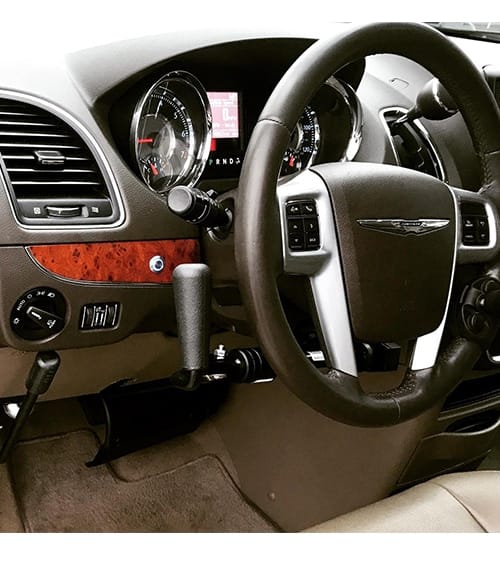
Under IRS Publication 502, deductions for “the cost of special hand controls and other special equipment installed in a car for the use of a person with a disability” are allowed.
It is referred in this document as “special design” and won’t cover the cost of the “regular car,” but will cover the difference of a “car specially designed to hold a wheelchair,” meaning the chassis cost won’t be covered, but your accessible BraunAbility conversion will be.
What is Considered Tax Deductible?
You can include in “medical expenses” the difference between two costs.
Compare the cost of a regular car and a car specially designed to hold a wheelchair. Most of your deduction opportunities will fall under this category of medical expenses.
You can include out-of-pocket expenses, such as the cost of gas and oil. This applies when you use a car for medical reasons. You can’t include depreciation, insurance, general repair, or maintenance expenses.
If you don’t want to use your actual expenses for 2018, there is another option. You can use the standard medical mileage rate of 18 cents per mile.
You can also include costs incurred from parking fees and tolls. You can add these fees and tolls whether you use what is called actual expenses or the standard mileage rate.
Say you drove 1200 miles for medical reasons in 2019. You spent $300 on gas, $10 for oil, and $200 for tolls and parking. You can do some simple math to figure out what your greatest rate of return would be.
First, add up the cost of actual expenses (gas, oil, tolls and parking). That is $300 of gas + $10 for oil + $200 for tolls and parking for a total of $510.
Then, figure your standard mileage amount. Multiply 1,200 miles by 18 cents a mile for a total of $216. Then you can add your tolls and parking for a total of $416.
You would then include $510 of car expenses with your other medical expenses for your 2019 return. Why?
Because $510 is more than $416.
Transportation expenses CAN’T include:
- Going to and from work, even if your condition requires a non-typical means of transportation.
- Travel for purely personal reasons to another city for an operation or other medical care. (Example: your brother lives in Seattle, so you travel there to see him and receive medical care while vacationing.)
- Travel that is merely for the general improvement of one’s health.
- The costs of operating a specially equipped car for other than medical reasons.
Be aware that you may include in medical expenses the amount you pay for transportation to another city.
This applies if the trip is primarily for receiving medical services.
You can include lodging for a person traveling with the individual receiving the medical care. That could be a parent or spouse.
However, you may not include in medical expenses a trip or vacation “taken merely for a change in environment, improvement of morale, or general improvement of health, even if the trip is made on the advice of a doctor.”
Tax Deductions for a BraunAbility Van
To establish eligibility, you must have a letter or prescription from a licensed physician.
Hopefully, you already have a prescription, because you need it to apply for your mobility rebate. Chrysler, Toyota, and Honda all offer a rebate of up to $1,000 if you have modified one of their new, eligible vehicles and provide them with the necessary supporting documents.
In most states, the same prescription can be used for another exemption. It exempts your wheelchair van or other vehicle mobility product from state and local sales taxes. Again, check with your CPA. They would be your best source for this information.
Who is Eligible to Deduct a Wheelchair Accessible Vehicle from Tax Deductions?
You can include medical expenses you pay for yourself.
You can also include those for your spouse or dependent. They qualify if that was true either when the services were provided or when they were paid for.
A dependent is someone defined as a:
- Qualifying child – Must be:
- A son, daughter, stepchild, foster child, brother, sister, step-sibling, or half-sibling counts. So does a descendant of any of them (for example, a grandson or a niece).
- Was under the age of 19 in 2019 and younger than you.
- Under the age of 24 and a full time student and younger than you
- Any age and permanently disabled.
This qualifying child must also have lived with you for more than half of the year.
The child also can’t have provided over half of his or her own support for 2019.
- Qualifying relative – Must be:
- Your sibling, half-sibling, or a descendant of any of them.
- A parent, ancestor or sibling of ay of them
- A step-sibling or step-parent or an in-law (mother, father, brother, sister) or
- Any other person other than your spouse who lived with you all year as a household member counts. The relationship must not have violated local law
- Adopted child – If you are a U.S. citizen or national and your adopted child lived with you in 2019, there is an exception.
That child does not need to be a U.S., Canada or Mexico citizen or resident to count as your dependent.
Tax Deductions for Capital Expenses, Like Accessible Home Renovations
If you made any alterations to your home to make it accessible for someone with physical disabilities, the cost of these expenses can be included as a medical expense.
Improvements may include some of the following examples:
- Constructing entrance or exit ramps for your home.
- Installing railings, grab bars or other modifications throughout the home.
- Widening or modifying hallways and interior doorways.
- Modifying hardware on doors to make them easier to grip.
The document reads that costs related to architectural or aesthetic reasons can’t be counted as a medical expense and therefore can’t be included for a tax return.
Additional Tax Deduction Areas for People With Disabilities
There are many categories that may apply to you in the IRS publication that could apply to your tax return.
See the full list here and be sure to look out for the following areas:
- Ambulance
- Artificial Limb
- Bandages
- Body Scan
- Braille Books and Magazines
- Capital Expenses
- Chiropractor
- Crutches
- Diagnostic Devices
- Disabled Dependent Care Expenses
- Guide Dog or Other Service Animal
- Health Institute
- HMO – Health Maintenance Organization
- Hearing Aids
- Hospital Services
- Insurance Premiums
- Special Home for Intellectually and Developmentally Disabled
- Lab Fees
- Lifetime Care
- Long-Term Care
- Medicines
- Nursing Home
- Nursing Services
- Operations
- Oxygen
- Special Education
- Therapy
- Transportation
- Wheelchair
Taxes are not always easy to navigate alone.
Another good piece of advice: always consult with a tax professional. They can make sure you are applying this deduction properly and find out if you are owed any other deductions.
Knowing what you do now, a wheelchair accessible conversion or other mobility vehicle equipment can be a huge benefit. It can help you and your family without being a detriment to your savings. It can take the place of a vehicle you currently own.
In that case, your day-to-day travel costs for doctor visits, treatments, and therapy are all tax-deductible. That includes fuel, parking fees, and tolls. And even other mobility equipment like Chair Toppers, mobility seating products and wheelchair securement products are all eligible for tax deductions.




